What do you need for these Thanksgiving crafts?
Gather paper, crayons or pencils, glue and scissors for an adult to prepare shapes or supervise cutting. Paper scraps work for the leaf picture and garland. An adult can write a child’s spoken words, so the activity need not depend on independent writing.
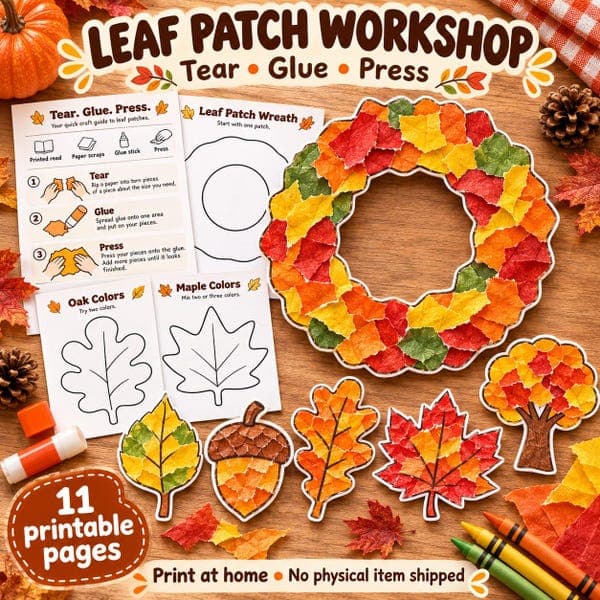
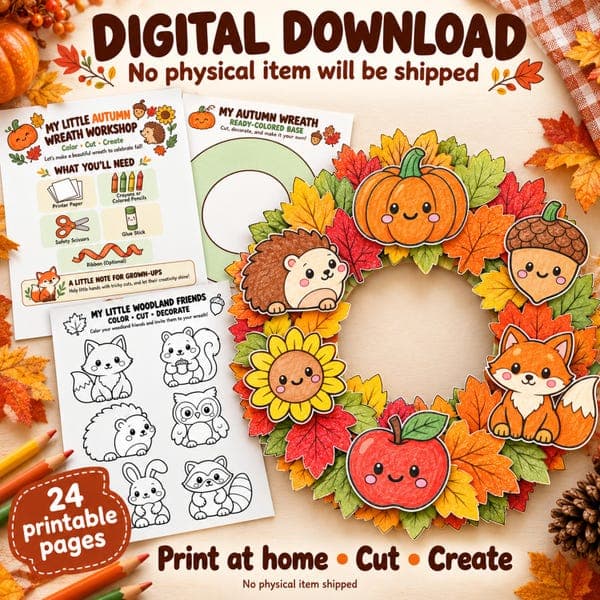
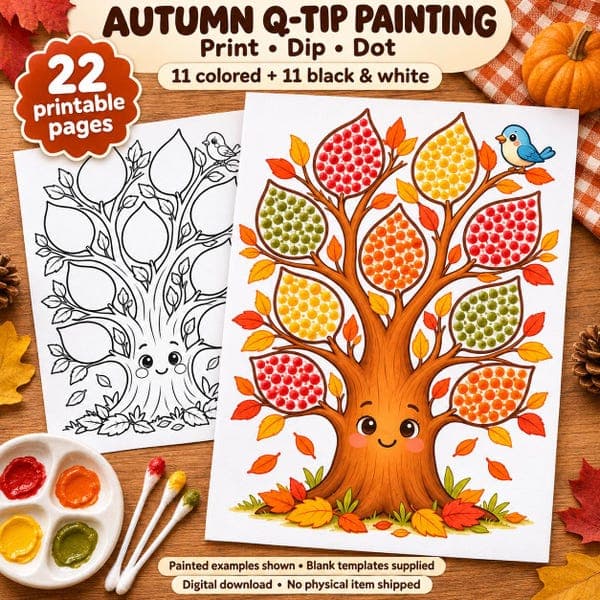
These ideas are general paper crafts, not a claim that a Clarioza Thanksgiving PDF is included or free to download. If you prefer an existing printable, the fall leaf collage mats and autumn wreath are separate Etsy-linked products; their seasonal artwork is autumn-themed.
How do you make a thankful-leaf picture?
Make a leaf-shaped paper collage and add a spoken or written message about someone or something you appreciate. Use a sheet as the background so the pieces stay together.
- Draw a large leaf outline on a sheet. An adult can make the outline or leave the child to draw their own shape.
- Tear colored paper into pieces. Arrange them inside the outline before adding small amounts of glue.
- Write or dictate a thankful message beside the leaf. Let the child choose the subject and colors.
- Leave the page flat until the glue is dry. Display it at the craft table or take it home after the gathering.
How do you make a folded Thanksgiving place card?
Fold a small rectangle of paper into a standing card, then add a guest’s name and a drawing. This gives children a personal making task without requiring a printed design.
- Ask an adult to prepare rectangles of paper. Fold each across the middle and stand it with the fold at the top.
- Decorate one face with a leaf, pumpkin or your own pattern. Keep the bottom edge clear so the name is readable.
- Write the guest’s name, or ask an adult to write it. Check the fold stands before setting it beside the plate.
How can children make a shared thankful garland?
Give each participant a paper leaf to decorate and place the finished leaves in a row. Each person can add a word, drawing or dictated message. An adult can attach the leaves to a paper strip for a shared display; keep it away from food, heat and children’s reach if hanging it.
Use a tabletop row of leaves instead if you do not want a hanging decoration. Children can move the pieces to make a new color pattern, then keep their own leaf after the gathering.
How do you adapt the crafts for different abilities?
Change the amount of adult preparation, not the value of the finished work. Offer larger pre-cut shapes, let children tear rather than cut, and accept a drawing instead of a written message. Children who want a longer project can add a border or make another card.
Choose tools and loose pieces to suit the children present and provide adult supervision. If using a purchased printable as a starting point, follow that pack’s instructions and license rather than assuming this guide changes its permitted use.